Why Clean Vector Line Art Matters for Kids' Printable Pages
Gray fills, tiny speckles, and broken outlines turn crayons into frustration. Here’s what clean vector-style line art means for kids, and how to spot a printable that’s worth printing.
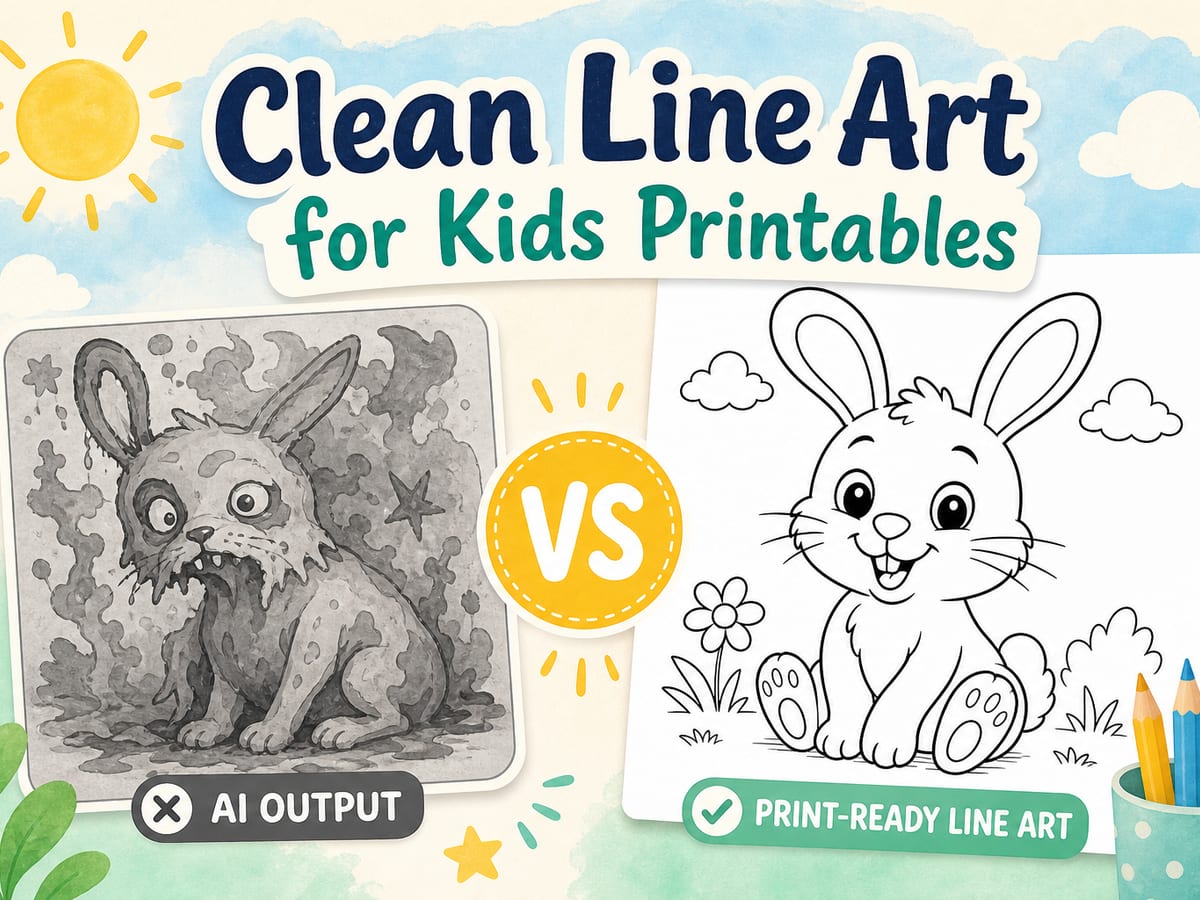
Not every black-and-white image is a good coloring page. Kids notice immediately when outlines are fuzzy, shapes don’t close, or the “white” areas are actually soft gray. Clean vector-style line art fixes the problems that make printing and coloring feel hard.
What “clean vector line art” actually means
In practice, it means bold, high-contrast strokes on a true white background. Lines should form closed shapes kids can fill. Details should be large enough for little hands, especially for preschool and early elementary ages.
Why it matters at the printer
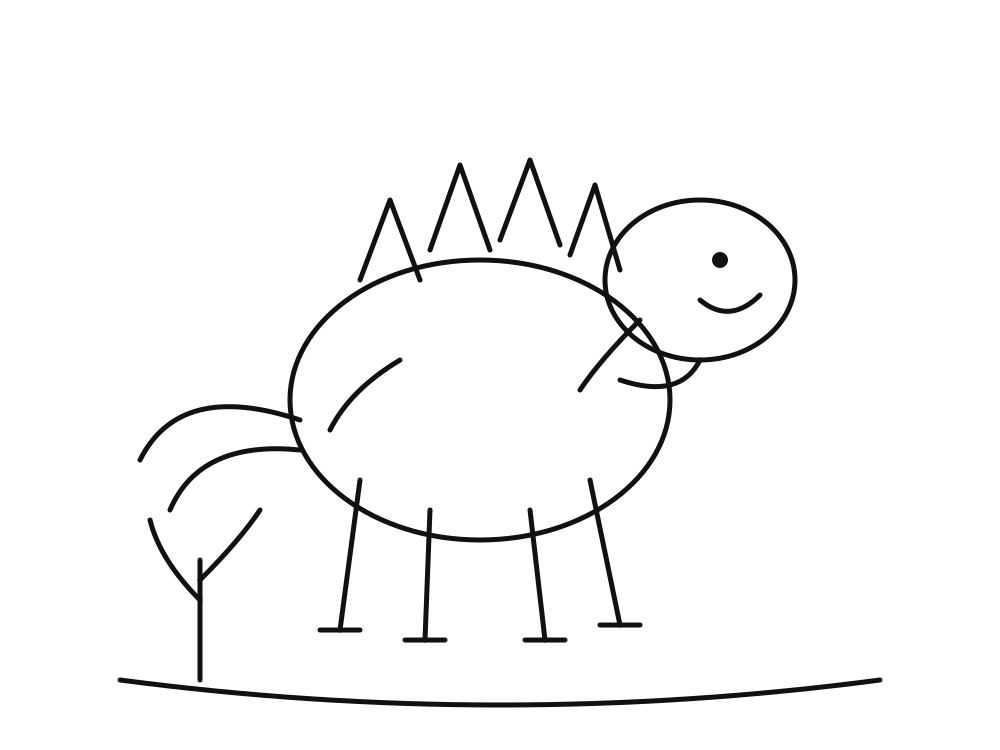
- Less ink: true white backgrounds don’t burn through toner or cartridges
- Sharper edges: thick outlines survive ordinary home printers
- Fewer surprises: what you see on screen matches the paper more closely
If a preview looks smoky or speckled on screen, it will look worse on paper.
Why it matters for kids
Coloring is motor practice and calm focus. Muddy AI shading forces kids to “color over gray,” which feels unfinished. Tiny overlapping scribbles make flood-fill apps and markers behave oddly. Clean line art keeps the joy in the activity.
Age-friendly detail levels
- Ages 3–5: one main character, big shapes, minimal background
- Ages 6–8: a simple scene with a few props kids recognize
- Ages 9+: more detailed patterns, still with clear boundaries
How to spot a printable worth saving
- Background is pure white, not gray mist
- Lines are continuous around faces, paws, wheels, and wings
- No photorealistic shadows pretending to be outlines
- Text (if any) is large and optional. Kids don’t need captions to color
A simple parent checklist before you hit Print
Zoom the image to 100%. Ask: Can my child tell where one shape ends and another begins? If yes, print. If not, regenerate with a simpler prompt, or grab a curated sheet from the Printable Library.